Last Updated: 13 September 2026
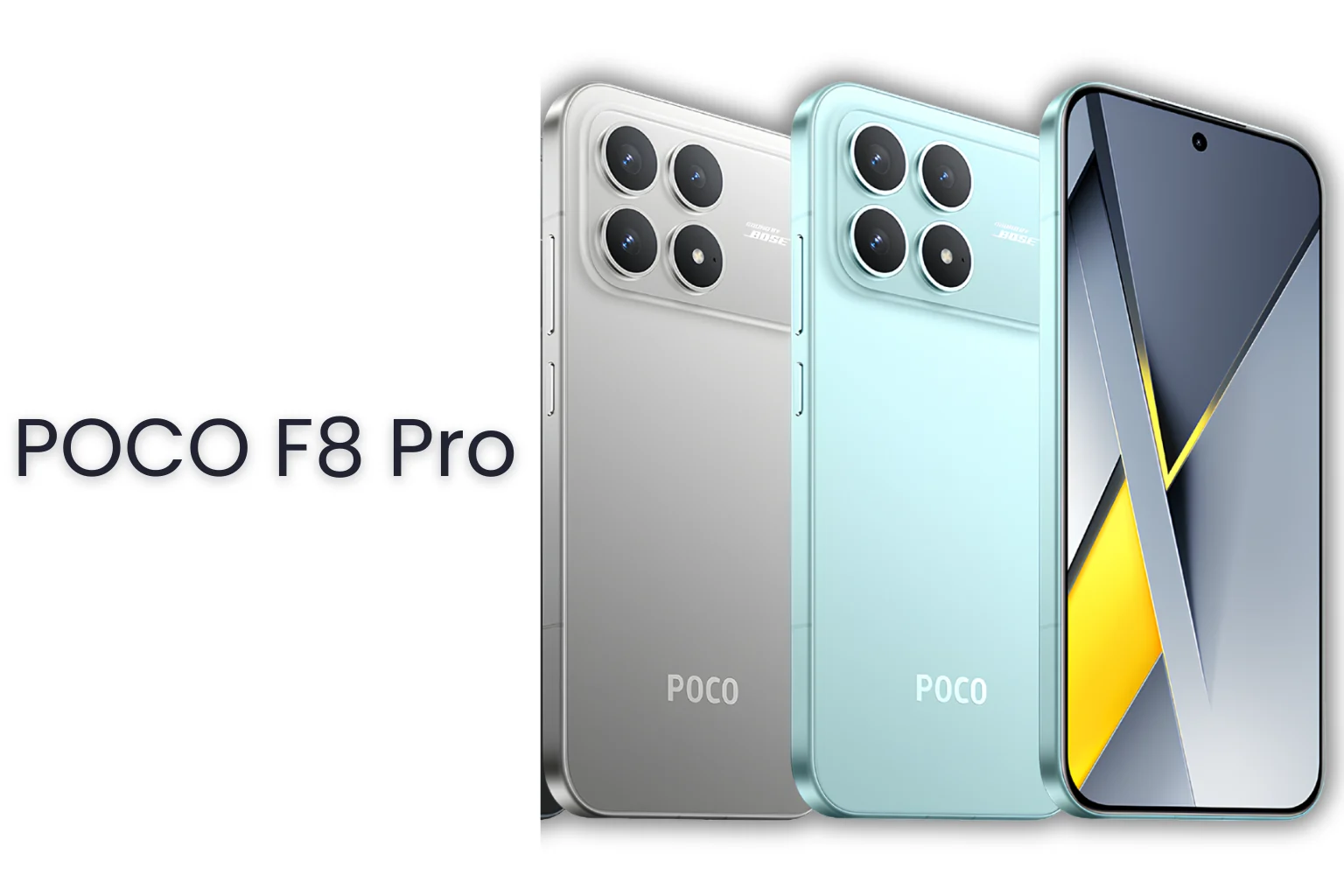
POCO F8 Pro price in Nepal is NPR 99,999 for the sole 12GB RAM and 512GB storage variant. That puts it just under one lakh, which is where POCO clearly aimed. The phone launched globally on November 26, 2025, at a POCO event in Bali, Indonesia, and Nepal got authorized stock shortly after through official POCO channels. What you’re actually buying at this price: the Snapdragon 8 Elite chip inside practically every 2025 flagship, a 6.59-inch POCO HyperRGB AMOLED that hits 3,500 nits in peak brightness, a 6,210mAh battery with 100W charging that fills up in roughly 36 minutes, 8K video recording, and the first telephoto camera ever on a POCO Pro model. IP68 rated, 199 grams, 8mm thin. That’s the headline.
Before you pay NPR 99,999, know this:
- The 8MP ultrawide is the weakest point on the camera, by a considerable distance. Reviewers across multiple markets put it plainly: it looks like it belongs on a phone costing a third of this one. The telephoto and main camera are both solid, but the ultrawide will disappoint anyone who shoots wide angles regularly.
- No wireless charging at all. For a phone pushing up against NPR 1,00,000, that is a real gap. The Samsung Galaxy S25 FE at NPR 107,999 has wireless charging. The POCO F8 Pro does not, and there is no workaround.
- The global variant gets a 6,210mAh battery. The Chinese Redmi K90 that this phone is based on came with a 7,100mAh cell. POCO trimmed it for global markets. You still get the 100W charging, but the capacity is smaller than what the Chinese version shipped with.
- USB-C data speeds are slow. Benchmarks put it well below what USB 3.x capable phones transfer at. For a phone that records 8K video and has 512GB of storage, slow wired transfers are a frustrating mismatch.
| Spec | Detail |
|---|---|
| Display | 6.59 inch POCO HyperRGB AMOLED, 1.5K (1156×2510), 120Hz, 3,500 nits peak, HDR10+, Gorilla Glass 7i |
| Chipset | Qualcomm Snapdragon 8 Elite (3nm) |
| RAM and storage | 12GB LPDDR5X, 512GB UFS 4.x (Nepal sole variant) |
| Main camera | 50MP (f/1.9, 1/1.55 inch, OIS, PDAF) |
| Telephoto | 50MP (f/2.2, 2.5x optical zoom, OIS, PDAF) |
| Ultrawide | 8MP (f/2.2, 120 degrees FOV) |
| Front camera | 20MP (f/2.2) |
| Battery | 6,210mAh, 100W HyperCharge (0 to 100% in approximately 36 minutes) |
| OS | Android 16, HyperOS 3 (3 major OS updates, 4 years security) |
| Water resistance | IP68 (up to 2 meters for 30 minutes) |
| Video | 8K at 30fps, 4K at 30/60fps, 1080p up to 960fps slow motion |
| Audio | Sound by Bose, dual stereo speakers |
| Price in Nepal | NPR 99,999 (12/512GB) |
| Nepal availability | Late 2025, price verified June 2026 |
Who the POCO F8 Pro actually makes sense for
After going through every phone under NPR 1,00,000 officially available in Nepal, the F8 Pro makes its strongest case for two types of buyers. First, anyone who games seriously and wants flagship performance without crossing the NPR 1,00,000 line. The Snapdragon 8 Elite handles every mobile game at maximum settings without throttling in the way mid range chips do. The WildBoost Optimization in HyperOS 3 actively prioritizes gaming load during play, and the 3D triple layer IceLoop cooling system keeps temperatures manageable through long sessions. Second, people who want a genuinely fast charging experience on a large battery. 100W filling 6,210mAh in around 36 minutes is impressive by any standard, and the charger is in the box.
It’s also the first POCO Pro phone with a real telephoto lens, which matters for buyers who have passed on previous POCO flagships specifically because of the missing zoom camera.
Skip it if the camera system as a whole is your priority. The main lens and telephoto are decent to good, but the ultrawide is embarrassingly weak for the price and the selfie camera underwhelms. Also skip it if wireless charging is something you use or plan to use, because there is simply no option for it here. And skip it if you want more than 3 years of Android updates, since POCO matches Xiaomi and Redmi’s standard commitment, which sits well below Samsung’s offering at similar prices.
POCO F8 Pro Nepal launch and availability
POCO announced the F8 Pro on November 26, 2025, at its global launch in Bali alongside the F8 Ultra. Nepal received authorized stock in late 2025 through official POCO distribution channels. Only the 12GB RAM and 512GB storage configuration is officially stocked here. The phone comes in Titanium Silver, Blue, and Black. One year of official warranty covers the device. Price confirmed from authorized Nepal sources as of June 2026.
Worth knowing: the global F8 Pro is a rebranded version of the Redmi K90, which launched in China with a slightly larger 7,100mAh battery. The global version shipped with 6,210mAh instead, a deliberate reduction for international markets.
Full specifications of POCO F8 Pro
General
- Model: POCO F8 Pro
- Global launch: November 26, 2025
- Nepal availability: Late 2025
- Dimensions: 157.49 x 75.25 x 8.0 mm
- Weight: 199g
- Build: One piece CNC milled glass back, aluminum frame, Gorilla Glass 7i front
- SIM: Dual Nano SIM, no microSD slot
- Water resistance: IP68 (up to 2 meters for 30 minutes)
- Colors: Titanium Silver, Blue, Black
Display
- Size: 6.59 inches
- Type: POCO HyperRGB AMOLED, 1.5K (1156 x 2510 pixels)
- Refresh rate: 120Hz
- Peak brightness: 3,500 nits
- HDR: HDR10+
- Protection: Corning Gorilla Glass 7i
- Under display fingerprint sensor: Yes (optical)
Performance
- Chipset: Qualcomm Snapdragon 8 Elite (3nm)
- CPU: Octa-core (2×4.47GHz Oryon V2 + 6×3.53GHz Oryon V2)
- GPU: Adreno 830
- Cooling: 3D triple layer IceLoop system
- RAM: 12GB LPDDR5X
- Storage: 512GB UFS 4.x
- Expandable storage: No
Camera
- Main camera: 50MP, f/1.9, 24mm, 1/1.55 inch sensor, OIS, PDAF
- Telephoto: 50MP, f/2.2, 60mm, 2.5x optical zoom, OIS, PDAF
- Ultrawide: 8MP, f/2.2, 120 degree FOV (the weak link)
- Rear video: 8K at 30fps, 4K at 30/60fps, 1080p at 30/60/120/240/960fps, gyro-EIS, HDR10+
- Front camera: 20MP, f/2.2
- Front video: 1080p at 30fps
Audio
- Speakers: Dual stereo speakers, Sound by Bose
- Headphone jack: No
Connectivity
- Network: 5G, 4G LTE, 3G, 2G
- WiFi: Wi-Fi 7 (802.11be)
- Bluetooth: 5.4
- NFC: Yes
- GPS: GPS, GLONASS, Galileo, BDS, QZSS
- USB: USB Type-C (slow data transfer speeds despite flagship chip)
- IR blaster: Yes
Battery
- Capacity: 6,210mAh (global variant; Chinese K90 has 7,100mAh)
- Wired charging: 100W HyperCharge (0 to 100% in approximately 36 minutes)
- Wireless charging: No
- Charger included: Yes, 100W adapter in box
Software
- OS at launch: Android 16, HyperOS 3
- OS updates: 3 major Android upgrades
- Security updates: 4 years
- Gaming features: WildBoost Optimization 5.0, Smart Frame Rate up to 120fps, Game HDR, Super Resolution up to 1.5K in supported games
Security and sensors
- Fingerprint: Under display optical fingerprint sensor
- Face unlock: Yes
- Sensors: Accelerometer, gyroscope, proximity, compass, barometer, IR blaster
Detailed review of POCO F8 Pro
Design and build quality
The one piece CNC milled glass back is a genuine step up from the plastic back mid rangers POCO used to compete against. It feels different in hand than most phones at this price, cooler to touch and with more grip than a polished glass back. At 199 grams, it is surprisingly light for a phone packing a 6,210mAh battery. The 8mm profile is a similar thickness to several flagships that cost significantly more. IP68 at 2 meters for 30 minutes is the strongest water resistance rating available on any POCO phone to date.
The design is clean rather than flashy. No bright yellow. No aggressive gaming phone aesthetic. Three muted colors: Black, Titanium Silver, and Blue. For buyers who want a phone that looks like it belongs in a meeting as much as a gaming session, the F8 Pro manages that better than its predecessors.
Performance
The Snapdragon 8 Elite in the F8 Pro is the same chip inside the Samsung Galaxy S25 Ultra, the OnePlus 13, and every other major 2025 Android flagship. AnTuTu scores push past 2.8 million. In practical use, every app opens instantly, every game runs at maximum settings, and the phone stays cool through extended play sessions thanks to the 3D triple layer IceLoop cooling. WildBoost Optimization 5.0 takes this further during gaming: it actively manages memory allocation, network bandwidth, and frame pacing to prioritize the game you’re in.
In benchmarks, CPU throttling tests showed the F8 Pro maintains sustained performance significantly better than the previous generation Snapdragon 8 Gen 3, thanks to the 3nm manufacturing and the improved cooling architecture. For Nepal buyers who specifically want the fastest Android phone under NPR 1,00,000, there is currently nothing in the authorized market that comes close to what this chip delivers.
Software
HyperOS 3 on Android 16 is functional but carries the same Xiaomi software baggage that has defined this lineup for years. Pre installed apps need to be cleared out after first setup. The gaming specific features are genuinely well implemented. WildBoost Optimization, Smart Frame Rate, and Game HDR all do what they say. But the everyday HyperOS experience still has promotional content showing up in places it shouldn’t, and the cleanup process after first boot takes 20 to 30 minutes before the phone feels like yours.
Three major Android OS updates means the F8 Pro gets Android 19 and stops there. Four years of security patches follow. For buyers keeping a phone for 4 to 5 years, this creates a real gap in the final stretch compared to what Samsung promises at similar prices.
Display
The 6.59-inch POCO HyperRGB AMOLED at 3,500 nits is one of the best displays under NPR 1,00,000 in Nepal. The 1.5K resolution sits between the standard FHD+ on most mid rangers and the full 2K on some flagships, landing in a place where everything looks sharp without the power cost of full 2K. Colors are accurate, blacks are deep, and the 3,500 nit ceiling means reading this screen in direct Kathmandu summer sun is not the squinting exercise it is on lower brightness phones. Gorilla Glass 7i handles drops reliably. The under display fingerprint reader is fast and accurate in real use.
Gaming wise, the display supports MEMC frame insertion to smooth out content below 120fps, and Super Resolution upscaling from HyperOS 3 improves visual quality in games that don’t natively render at high resolutions. For a gaming first phone, the display holds up its end.
Camera
This is the most nuanced part of the F8 Pro story. The main 50MP camera with OIS produces solid daylight results with natural color rendering and accurate exposure. The large 1/1.55 inch sensor captures more light than typical sensors at this price. In good lighting, photos look genuinely impressive. The OIS helps with handheld low light shots, reducing blur meaningfully compared to phones without stabilisation at this price.
The 50MP 2.5x telephoto with OIS is new to the POCO Pro lineup and works well within its range. At 2.5x optical and up to 5x zoom, subject detail is solid and the Bose tuned audio processing does not extend to photos obviously. Zoom beyond 5x gets soft quickly, which is a limitation of 2.5x optical compared to 5x periscopes on competing phones at higher prices.
Then there is the 8MP ultrawide, and reviewers have been direct about it. There are compromises, namely with the ultra wide, selfie, and telephoto cameras according to TechRadar’s review. GadgetByte Nepal’s review was more specific: the 8MP ultra wide lens does not produce good details and colors in the images and described the ultrawide as looking like it came from a much cheaper phone. This is not a fixable problem through software updates. The sensor is small, the lens is not designed for optical quality, and the results show it. The F8 Pro effectively operates as a dual camera phone for anyone who cares about image quality.
Night mode on the main camera is decent but not exceptional. If there’s a bright light source, the phone generally cannot handle the highlights and glares like 90% of the time. The 20MP selfie camera takes acceptable photos in good light but softens in anything dimmer.
Audio
Sound by Bose is not a marketing label that changes equalizer settings. POCO’s partnership with Bose involved tuning the speaker hardware and amplifier configuration, and the result is the best dual stereo speaker setup available on any phone under NPR 1,00,000 in Nepal. Volume is high, bass has actual weight, and stereo separation creates a convincing soundstage for gaming audio and media. For gaming and video consumption without earphones, the F8 Pro’s speakers are genuinely impressive.
Battery
The 6,210mAh battery comfortably covers a full day of heavy use for most buyers. Gaming for two hours, streaming for another two, with regular social media and calls in between leaves most users with 25 to 35 percent by end of day. The Snapdragon 8 Elite’s power efficiency, combined with the large cell, contributes to endurance that earlier Snapdragon 8 Gen 3 phones couldn’t match despite similar battery sizes.
100W HyperCharge fills the battery from zero to full in approximately 36 minutes. The 100W adapter ships in the box, which at NPR 99,999 is expected but still worth noting since some competitors at similar prices omit it. The absence of wireless charging is the battery system’s real limitation. There is no workaround. Buyers who charge overnight won’t notice, but anyone who uses wireless charging pads at home, in the car, or at work will feel this gap daily.
Connectivity
Wi-Fi 7, 5G, Bluetooth 5.4, NFC, and an IR blaster cover everything. Wi-Fi 7 is a genuine upgrade over Wi-Fi 6 for anyone with a compatible router. The IR blaster, increasingly rare on flagships, lets you control TVs and appliances directly. USB data transfer speeds are the one connectivity frustration: despite the flagship chip and 512GB of UFS 4.x storage, the USB port transfers files slowly in practice. Moving a large video library to a computer takes noticeably longer than on phones with faster USB implementations.
POCO F8 Pro vs competitors in Nepal
| Feature | POCO F8 Pro | Samsung Galaxy S25 FE | OnePlus 13 |
|---|---|---|---|
| Price (Nepal) | NPR 99,999 (12/512GB) | NPR 107,999 (8/256GB) | NPR 141,999 (12/512GB) |
| Chipset | Snapdragon 8 Elite | Exynos 2500 | Snapdragon 8 Elite |
| Main camera | 50MP OIS, 1/1.55 inch | 50MP OIS | 50MP OIS |
| Telephoto | 50MP 2.5x OIS | 10MP 3x OIS | 50MP 3x periscope OIS |
| Ultrawide | 8MP (weak) | 12MP | 50MP |
| Battery | 6,210mAh, 100W | 4,900mAh, 45W | 6,000mAh, 100W |
| Wireless charging | No | 15W | 50W |
| Display | 6.59-inch AMOLED, 3,500 nits | 6.7-inch AMOLED, 1,900 nits | 6.82-inch LTPO AMOLED, 4,500 nits |
| OS updates | 3 major | 7 major | 4 major |
| Audio | Bose stereo | Stereo | Hasselblad-tuned stereo |
| IP rating | IP68 | IP68 | IP68 |
| Charger in box | Yes (100W) | No | Yes (100W) |
| IR blaster | Yes | No | No |
The Samsung Galaxy S25 FE at NPR 107,999 costs NPR 8,000 more for 8GB RAM and 256GB storage versus the F8 Pro’s 12GB and 512GB. Samsung wins on 7 years of Android updates, wireless charging, and a better overall camera system. The F8 Pro wins on chipset performance (Snapdragon 8 Elite vs Exynos 2500), storage (512GB vs 256GB), battery size (6,210mAh vs 4,900mAh), charging speed (100W vs 45W with charger in box), display brightness (3,500 nits vs 1,900 nits), and price. For buyers who care about raw performance and fast charging, the F8 Pro offers significantly more for less money. For buyers planning to keep the phone for 5 plus years, Samsung’s update window is a meaningful argument to spend the extra NPR 8,000.
The OnePlus 13 at NPR 141,999 costs NPR 42,000 more and brings a 50MP periscope telephoto, a 50MP ultrawide, wireless charging at 50W, and LTPO display with a higher 4,500 nit ceiling. The F8 Pro closes most of the performance gap with the same Snapdragon 8 Elite chip for a significantly lower price. If the camera system and wireless charging are not priorities, the F8 Pro at NPR 99,999 competes with the OnePlus 13 on the most important daily performance metrics for NPR 42,000 less.
Common buyer concerns about POCO F8 Pro
The ultrawide camera comes up in almost every real buyer discussion online. Multiple owners across Nepal and international markets describe discovering how limited the 8MP sensor is only after daily use. The cameras leave more to be desired according to multiple reviews, and this point shows up repeatedly in owner feedback. Anyone switching from a phone with a competitive ultrawide should adjust expectations before buying.
No wireless charging frustrates buyers who use wireless pads regularly. Several owners describe installing the phone on a wireless charger at home or in the car and finding it doesn’t work. This is a hardware omission with no software fix.
HyperOS bloatware is a consistent minor complaint. The first setup experience requires removing or disabling apps that serve no purpose for most Nepal users, and promotional notifications from system apps appear until manually disabled per app. This is a one time cleanup, but it adds 20 to 30 minutes to the setup process.
USB transfer speed comes up from buyers who move large files regularly. 512GB of fast internal storage with a slow USB port creates a bottleneck that owners who shoot video in 4K or 8K notice quickly. Cloud backup or Wi-Fi transfers are the practical workarounds, but neither replaces fast wired transfer for large file volumes.
POCO F8 Pro price and availability in Nepal
The POCO F8 Pro is available through authorized POCO dealers across Nepal. It arrived in late 2025 and remains officially stocked as of June 2026. Only the 12GB and 512GB variant is available here. One year of official warranty covers the device, and the 100W HyperCharge adapter, USB-C cable, and a silicone protective case all come in the box.
POCO F8 Pro price in Nepal
- 12GB RAM and 512GB storage: NPR 99,999
Price confirmed from authorized Nepal sources as of June 2026.
Pros and cons of POCO F8 Pro
Pros
- Snapdragon 8 Elite chip, fastest Android processor available under NPR 1,00,000 in Nepal
- 100W HyperCharge fills 6,210mAh in approximately 36 minutes
- 100W charger, silicone case, and cable all in the box
- 3,500 nit AMOLED display, one of the brightest under NPR 1,00,000 in Nepal
- IP68 water resistance
- First telephoto camera on a POCO Pro, 50MP 2.5x optical OIS
- Sound by Bose dual stereo speakers
- Wi-Fi 7, NFC, IR blaster
- 8K video recording
- 3D triple-layer IceLoop cooling for sustained gaming performance
- 512GB UFS 4.x storage
Cons
- 8MP ultrawide is a significant weak point, far below the quality of the other two cameras
- No wireless charging
- USB data transfer speeds are slow for a phone at this price
- 3 major Android updates only
- HyperOS 3 has bloatware requiring cleanup after setup
- 20MP selfie camera underwhelms
- Chinese K90 equivalent ships with a larger 7,100mAh battery
- No microSD expansion
- No headphone jack
Final verdict on POCO F8 Pro
The POCO F8 Pro is the strongest gaming and performance phone under NPR 1,00,000 in Nepal right now. The Snapdragon 8 Elite puts it on equal footing with phones costing NPR 50,000 to NPR 100,000 more on raw performance. The 100W charging, the Bose speaker system, the 3,500 nit display, and the first ever telephoto on a POCO Pro together make a package that punches well above its price on the specs that gaming and daily heavy users care most about.
The camera system is the part that requires clear eyes. The main and telephoto cameras are genuinely good. The ultrawide is genuinely not. The selfie camera is adequate at best. For buyers who shoot a lot of wide angle photos, group shots, or architecture, the F8 Pro is not the right phone regardless of what else it offers.
At NPR 99,999, just under one lakh, this is the answer for Nepal buyers who want Snapdragon 8 Elite performance without crossing into the Samsung Galaxy S25 FE or OnePlus 13 price territory. It makes the most obvious sense for gamers, for people who drain their battery fast and need the fastest possible charge, and for anyone who plays video back on their phone’s speakers regularly.
Frequently asked questions about POCO F8 Pro in Nepal
What is the price of POCO F8 Pro in Nepal?
The POCO F8 Pro price in Nepal is NPR 99,999 for the sole 12GB RAM and 512GB storage variant. Price confirmed from authorized POCO Nepal dealers as of June 2026.
When did POCO F8 Pro launch in Nepal?
POCO launched the F8 Pro globally on November 26, 2025, in Bali, Indonesia. Nepal received authorized stock in late 2025 through official distribution channels.
Is there a standard POCO F8 coming to Nepal?
No standard POCO F8 has been officially confirmed for Nepal. The F8 series launched globally with only the F8 Pro and F8 Ultra models. A standard F8 has been rumored but has not been officially announced with confirmed specs or a launch date as of September 2026.
Is the POCO F8 Pro good for gaming?
Yes, it is the best gaming phone under NPR 1,00,000 in Nepal. The Snapdragon 8 Elite is the same chip in Samsung Galaxy S25 Ultra and OnePlus 13. Combined with WildBoost Optimization 5.0, the 3D triple layer cooling, and the 3,500 nit display, the F8 Pro handles every mobile game at maximum settings without meaningful throttling.
Does the POCO F8 Pro have wireless charging?
No. The POCO F8 Pro does not support wireless charging of any kind. 100W wired charging is the only option. There is no workaround for this.
How long does the POCO F8 Pro battery last?
Most buyers get through a full day of heavy use comfortably. Gaming for two hours, streaming for another two, with regular messaging and calls typically leaves 25 to 35 percent by end of day. The 100W charging fills the 6,210mAh cell in approximately 36 minutes.
Is the camera good on POCO F8 Pro?
Mixed. The 50MP main camera with OIS and the 50MP 2.5x telephoto with OIS are both solid in good lighting. The 8MP ultrawide is the camera system’s clear weak link, producing significantly worse results than the other two lenses even in good conditions. Multiple reviewers described it as looking like it came from a much cheaper phone. Night photography on the main camera is decent but not exceptional.
How does POCO F8 Pro compare to Samsung Galaxy S25 FE?
The Samsung Galaxy S25 FE costs NPR 107,999, which is NPR 8,000 more for 8GB RAM and 256GB storage. Samsung wins on 7 years of Android updates versus the F8 Pro’s 3, wireless charging, and a more complete camera system. The F8 Pro wins on chipset performance, storage (512GB vs 256GB), battery size (6,210mAh vs 4,900mAh), charging speed (100W vs 45W), display brightness, and price. For gaming performance and fast charging, the POCO is stronger. For software support and camera quality, Samsung is stronger.
Does the POCO F8 Pro have an IR blaster?
Yes. The F8 Pro includes an IR blaster for controlling TVs, air conditioners, and other appliances directly from the phone. This is increasingly rare on flagship phones and is a practical daily feature for Nepal buyers.
Where can I buy the POCO F8 Pro in Nepal?
Through authorized POCO dealers across Nepal. Always buy from an authorized dealer to get an MDMS registered device with official warranty and a proper VAT bill.
POCO F8 Pro price in Nepal
| Variant | Price | Recorded |
|---|---|---|
| 12/512GB | NPR 99,999 | 20 Nov 2026 |
| base | NPR 99,999 | 23 Nov 2026 |
Cheapest: 12/512GB at NPR 99,999. Official Nepal records from our own reviews; we do not sell devices.
Quick price facts
What is the POCO F8 Pro price in Nepal?
The POCO F8 Pro costs NPR 99,999 for the 12/512GB variant in Nepal, recorded 20 Nov 2026. Higher configurations go up to NPR 99,999
Which POCO F8 Pro variant is the cheapest in Nepal?
The 12/512GB variant at NPR 99,999.
When was the POCO F8 Pro price last updated?
Our most recent price record for the POCO F8 Pro is dated 20 Nov 2026.
Similar mobile prices in Nepal
- POCO X7 Pro — NPR 55,999
- POCO X6 Pro 5G — NPR 44,999
- POCO M8 5G — NPR 39,999
- POCO M6 Pro 4G — NPR 29,999